

Weekly Transcript Round-Up for 9/19/25
Little new info on assessment allegations from City Hall; Worrell against proposed exam school admissions changes & argues for role in BPS budget creation; BPDA vote shows unchanged status quo

Please join BPI at our first ever in-person event on Wednesday, September 24:
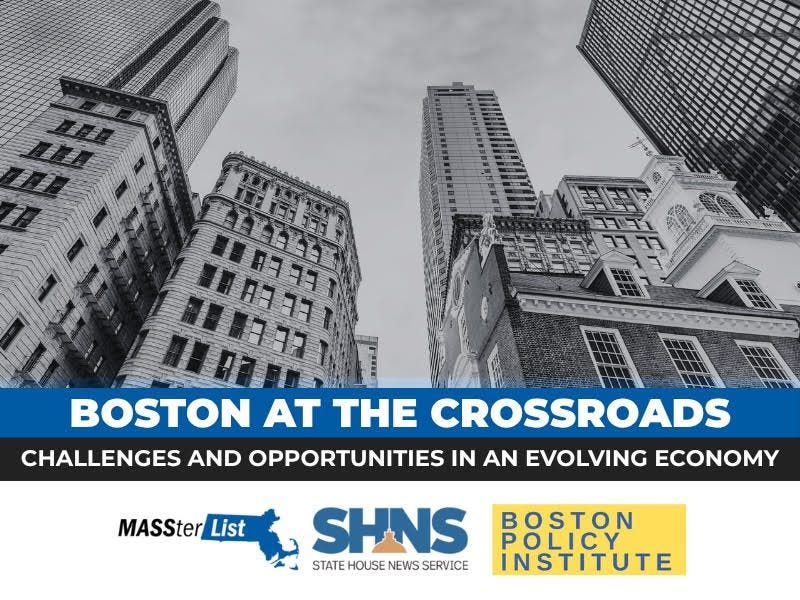
Boston is at an economic crossroads. The vitality of its downtown business district, drained by the COVID-19 epidemic, continues to slowly rebound but has yet to return to pre-pandemic levels. Commercial property values have declined, creating the potential for major budget challenges for the most property-tax dependent big city in America. With Boston’s financial underpinnings at risk, what is the strategy and vision for Boston’s future, particularly for its major business districts?
Join us for remarks and a panel discussion featuring city business and policy leaders on Boston’s challenges and opportunities as one of the world’s leading economic hubs:
Bob Rivers, Executive Chair, Eastern Bank
Evan Horowitz, Executive Director, Center for State Policy Analysis at Tufts University
Tito Jackson, former Boston City Councilor & current downtown Boston business owner
Meg Mainzer-Cohen, President, Back Bay Association
Moderator: Jon Chesto, Reporter, Boston Globe
This week there were updates on four big issues that BPI is following:
In response to an information request from the Council, City Hall provided written answers to allegations that office towers appealing their valuations are being over-assesssed, but those answers added little to previous statements from City spokespeople and Mayor Wu;
Councilor Worrell came out publicly against proposed changes to Boston Public Schools exam school admissions policy, an issue that the Council has been quiet on this term, and which the School Committee is expected to vote on sometime this fall;
Councilor Worrell also filed a docket explicitly aimed at involving the Council in BPS’ process creating the FY27 budget, with a pitch that works equally well for involving the Council in City Hall’s budget writing process;
Thursday’s vote on PLAN Downtown shows that despite headlines in 2023 and 2024 about wide-ranging changes, Boston’s planning & development status quo remains unchanged, with no formal power or role for the Council in the planning process, and the Mayor still the only elected official whose approval matters.
Keep reading for more on each item.
CITY HALL’S WRITTEN RESPONSES ADD LITTLE TO ASSESSMENT CONVERSATION


On Monday afternoon City Hall’s response to a information request from Councilor Ed Flynn, which was looking for details on office tower assessing practices after some of Boston’s most prominent real estate attorneys raised concerns about office towers being unfairly penalized for appealing their assessed values, was published - read it on p. 22-40. The information request, which is called a 17F under Boston City Council rules, was filed back on June 25, 2025 and under those rules was supposed to be answered in 7 days.* That means it should have been answered in 1 week - July 2, 2025 - but instead it took 12 weeks - September 17, 2025.
The same week that Flynn filed his 17F the Pioneer New England Legal Foundation (PNELF) - a public interest law firm - sent a letter about the same issue, starting a back-and-forth between PNELF, the state’s Department of Revenue, and City Hall. So far PNELF has not issued a public analysis of the 17F response, but based on BPI’s review, while the list of properties that have outstanding assessment appeals from FY23 and FY24 is new, the written answers in City Hall’s 17F response simply restates what a City Hall spokesperson and then Mayor Wu said back in late June when responding to the PNELF’s first letter.
Ultimately, this 17F serves mostly to show that the Council is unlikely to have much of an impact on this issue. That returns attention to the main question: will a lawsuit about this issue be filed, as was threatened back in August?
* Council Agendas for the body’s regular meetings on Wednesday are published on the Monday prior - so the 17F was made public on June 23 for the June 25 meeting, and the response was made public on September 15 for the September 17 meeting.
WORRELL COMES OUT PUBLICLY AGAINST EXAM SCHOOL ADMISSION CHANGES
On Wednesday, District 4 Councilor Brian Worrell publicly came out against proposed changes to Boston Public Schools (BPS) exam school admission policy in an Instagram post highlighting a letter that he wrote to the Boston School Committee.
It is important to note that the Council has no formal power to direct BPS or the School Committee on this issue. Exam school admissions has been a major issue in Boston for years, especially at the School Committee, but the Council has mostly been silent on the issue, making Worrell’s entry into this debate notable. How silent has the Council been? A review of transcripts from the Council’s current 2024-2025 term show it has only been discussed at just 3 meetings this term: in an FY25 budget hearing in May 2024; in an FY26 budget hearing in April 2025; and at the June 25, 2025 Council meeting where the only docket on the issue - #1282 - was filed by District 5 Councilor Enrique Pepen. So far no hearing has been scheduled on the issue.
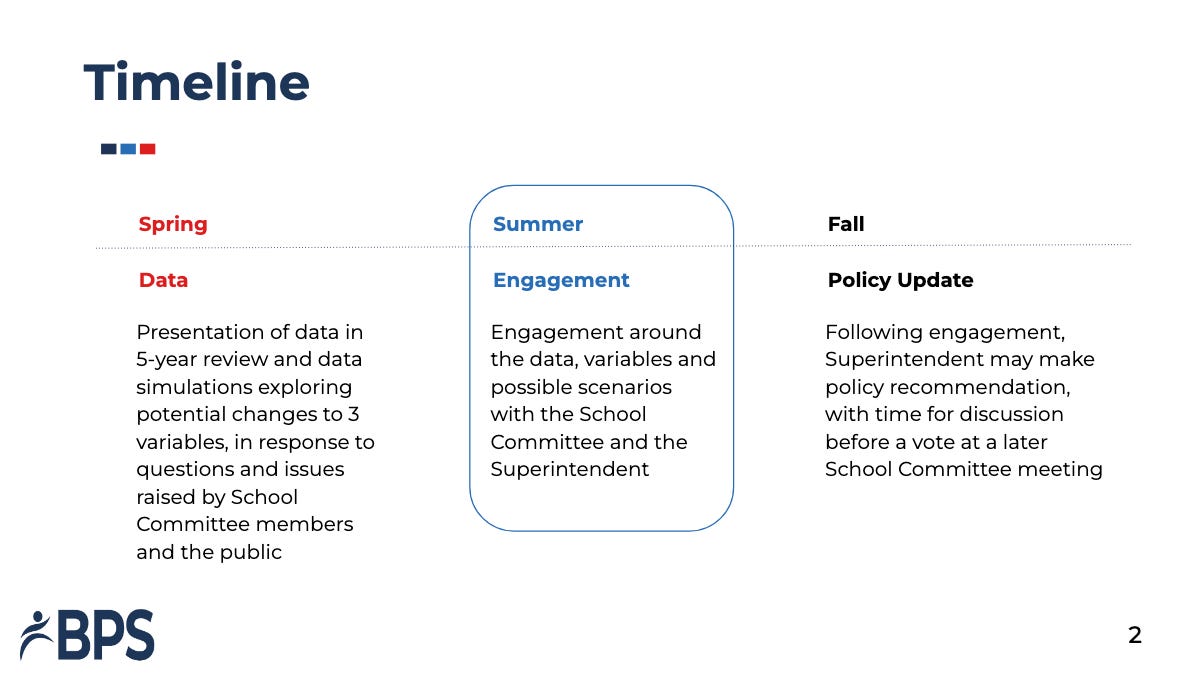
How much time the Council has to weigh in not clear: according to the presentation from BPS leadership to the School Committee at their September 10 meeting, a vote on changes to exam school admissions standards will come later this fall, with no specific meeting targeted. The School Committee has 7 more meetings this year, including one next week on September 25, so watch for more on this issue from the Council & School Committee.
WORRELL’S PITCH FOR COUNCIL INVOLVEMENT IN FY27 BUDGET CREATION FOR BPS WORKS FOR CITY HALL TOO
One thing that did happen in the Council chamber on Wednesday was Docket #1669, also from Councilor Worrell, to discuss Boston Public School FY27 budget - find the docket on p. 52. Worrell’s pitch for why this docket is important explicitly highlighted the Council’s lack of power - he is Speaker 12 & starts at the 1:21:42 mark:
If we don't engage early, we risk missing the chance to shape those decisions in ways that reflect the concerns we hear directly from our constituents. That's why I believe the council should continue talking to BPS from now until February and why it's critical that we have that we, as a council body, are advocating at the school committee. Meetings is not enough to weigh in after the budget reaches us. By then, it's already set.
This pitch from Worrell works equally well for the City of Boston’s FY27 budget: it is also being constructed now, and just like BPS, the Council has no formal role and little visibility into how decisions are made. It remains to be seen if Worrell will use his last few months as Ways & Means Chair for the 2024-2025 term to also get involved in that process.
PLAN DOWNTOWN APPROVAL SHOWS STATUS QUO REMAINS UNCHANGED BY COUNCIL’S PLANNING REFORMS
On Thursday night the Boston Planning & Development Board voted to accept massive zoning changes contained in the new PLAN Downtown, sending the changes to the Mayor’s desk for approval. In nearly every other community in MA - but notably not Boston - a decision like this needs more elected officials than just the Mayor to sign off on it: it would also need the approval of the Council or Select Board.
Returning that power to the Council was a bold-face goal of then-Councilor Michelle Wu’s 2019 “Abolish the BPDA” white paper - read more on p. 32 - but that change was left out of the planning reform legislation that Mayor Wu’s administration wrote & that the Council passed in 2023 & 2024.
BPI highlighted at the time - read BPI’s quotes in the Boston Herald & Boston Globe - that the absence of this major change meant that the various pieces of planning reform legislation passed by the Council did nothing to impact the underlying powers & role of the BPDA. Yesterday’s vote is the most public demonstration that despite all the legislation and rhetoric about how planning, development, and zoning having changed under this administration, the process - and the Council’s role in it- has not changed.
Boston Policy Institute, Inc is working to improve the public conversation - help us by following BPI on YouTube, TikTok, Facebook, Instagram, Threads, Twitter, and LinkedIn.